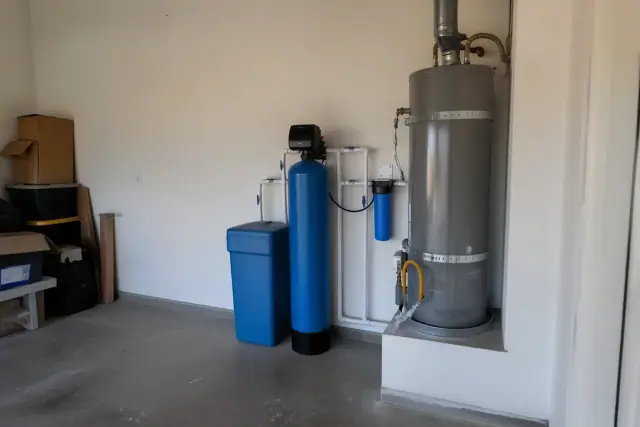
Tempe Water Filtration provides professional water filtration installation in Gilbert, AZ for homeowners and businesses that want better-tasting water, less scale, and a system chosen from real water test results. Whether you need whole-home water filtration, reverse osmosis drinking water, water softener installation, carbon filtration, sediment filtration, under-sink filtration, commercial water treatment, PFAS filtration, filter replacement, or water quality testing in Gilbert, our team helps match the right system to your water, home, business, plumbing layout, usage needs, peak flow rate, and budget.
Gilbert has a more detailed water profile than many homeowners realize. The town receives surface water from the Salt River Project and Central Arizona Project, operates the North Water Treatment Plant and Santan Vista Water Treatment Plant, and also uses groundwater wells during high-demand periods and canal maintenance. Gilbert performs up to 100 water quality tests per day and collects 150 bacteriological samples each month, but those citywide samples do not measure what is coming from your exact kitchen faucet, refrigerator line, RO faucet, water heater, or old plumbing.
Every recommendation from Tempe Water Filtration starts with in-home water testing, not a pre-built equipment package. Gilbert and nearby cities such as Glendale, AZ tap water meets required safety standards, but many residents still deal with noticeable chloramine or chlorine odor, hard water mineral buildup, sediment, cloudy water, seasonal taste changes, and drinking water concerns that affect daily use.
★ 4.9/5 Average Rating · 20+ Years of Experience · Thousands of Customers Helped · Licensed & Insured · Residential & Commercial
Request Free Estimate
Your information is 100% secure
CORE SERVICES
Tempe Water Filtration installs and services water filtration systems throughout Gilbert, including Agritopia, Morrison Ranch, Power Ranch, Val Vista Lakes, Seville, The Islands, Layton Lakes, Cooley Station, Higley, Spectrum, and nearby East Valley neighborhoods. Our systems are designed around the water problems Gilbert properties actually experience, including hard water scale, disinfectant taste, sediment, mineral-heavy drinking water, appliance buildup, PFAS concerns, and older filter performance issues.
Gilbert’s Water Quality staff performs up to 100 daily tests and collects 150 monthly bacteriological samples across representative distribution sites. That citywide monitoring is valuable, but it does not measure the water coming out of your specific kitchen faucet, refrigerator line, RO tap, water heater, softener loop, or old under-sink filter. That is why our process starts with testing the water at your property.

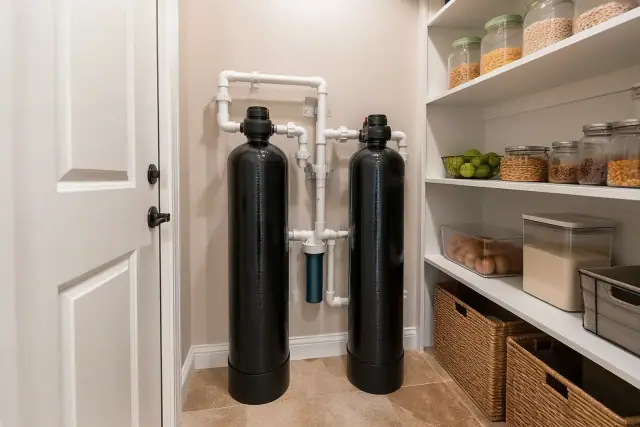
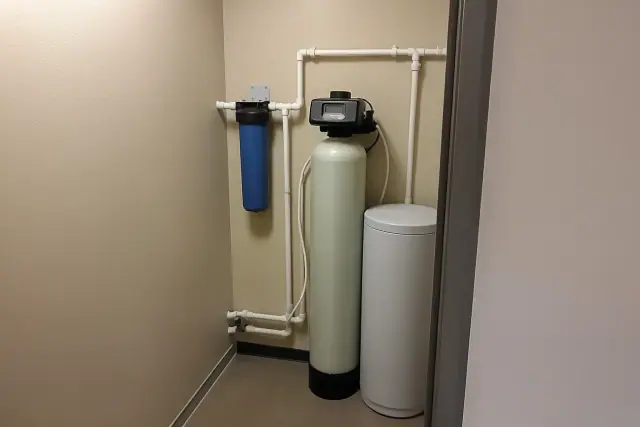
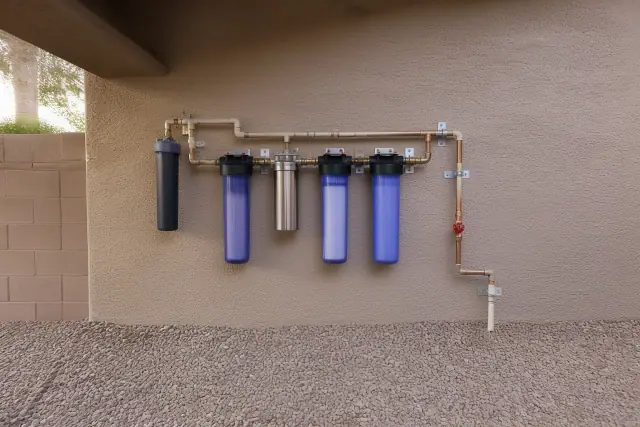
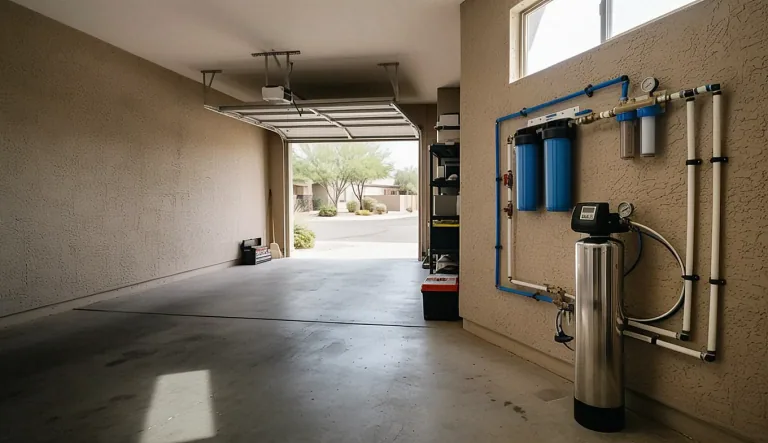
Whole-home water filtration systems treat water near the point where it enters your Gilbert home or business. This helps improve water before it reaches showers, faucets, laundry, water heaters, dishwashers, washing machines, ice makers, coffee systems, fixtures, and plumbing. This option is best when the water concern is not limited to one sink.
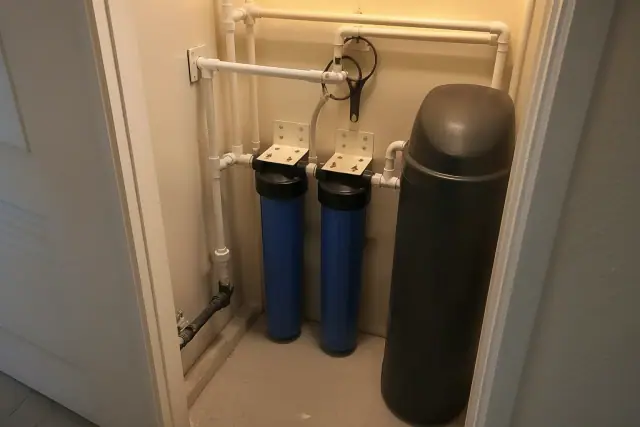
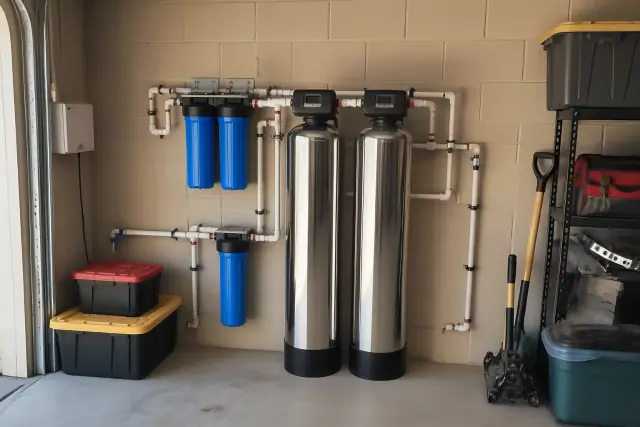
Depending on your test results, a whole-home system may include sediment filtration, carbon filtration, catalytic carbon, specialty media, scale control, a water softener, or a multi-stage configuration. Gilbert homes dealing with disinfectant taste, hard water buildup, and sediment concerns often benefit from a layered setup instead of one basic cartridge.
A whole-home system also needs to be sized correctly for household peak flow rate. This matters because carbon filters need enough contact time to reduce disinfectant taste and odor effectively. A system can have a large tank and still underperform if the water moves through the media too quickly during showers, laundry, dishwashing, or simultaneous fixture use.
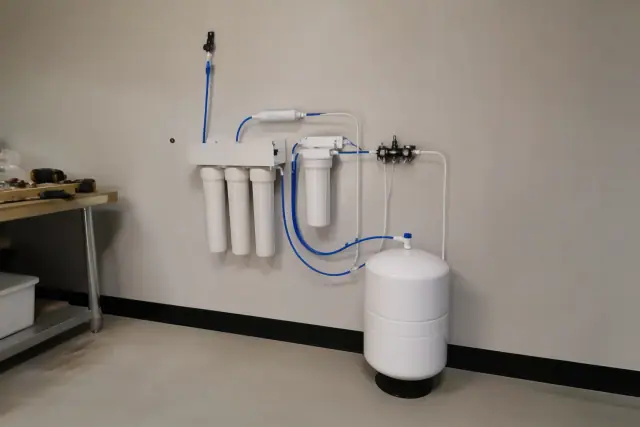
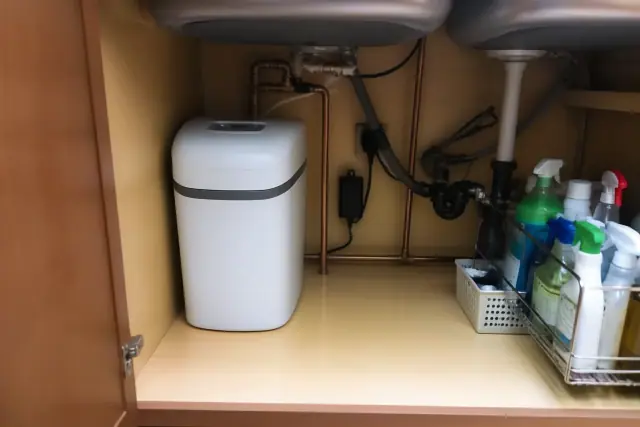
Reverse osmosis systems are installed under the kitchen sink to provide dedicated drinking and cooking water from a separate faucet. RO is commonly used in Gilbert homes for TDS, mineral taste, PFAS concerns, chromium, lead, arsenic, nitrates, fluoride, heavy metals, and dissolved contaminants depending on the system certification.
Gilbert’s water quality FAQ notes that reverse osmosis systems are typically the type of home treatment device used for chromium-related drinking water concerns. Gilbert previously reported hexavalent chromium in 63 of 68 samples during federal unregulated contaminant monitoring, with a range of 0–17 ppb and an average concentration of 5.9 ppb. An RO system selected with the right certification can give homeowners a dedicated drinking water option for contaminants that whole-home filters or softeners are not designed to address.
Reverse osmosis can also reduce bottled water dependence. Many Gilbert households use RO for drinking water, coffee, tea, ice, cooking, and bottle filling. Remineralization filters can be added when a customer wants the dissolved contaminant reduction of RO but prefers a smoother final taste.

Water softener installation is one of the most practical upgrades for Gilbert homes because hard water can leave white scale on faucets, spots on dishes, cloudy shower glass, soap scum, dry-feeling skin, stiff laundry, and buildup inside water heaters and appliances. Gilbert’s FAQ lists average hardness around 8–10 grains per gallon and suggests setting softeners around 10–12 grains to account for seasonal variation.
Tempe Water Filtration installs salt-based water softeners, salt-free conditioners, high-efficiency softeners, dual-tank systems, and combined filtration and softening systems. We size each softener around your actual hardness level, household size, water usage, number of bathrooms, plumbing layout, and long-term maintenance preferences.
Salt-based softeners and salt-free conditioners are not the same. A salt-based softener uses ion exchange to remove calcium and magnesium hardness minerals. A conditioner changes how minerals behave so they are less likely to form scale, but it does not remove hardness in the same way. We explain both options clearly before installation so you know what you are buying and why.

Carbon water filters help reduce chlorine taste, odor, VOCs, and chemical-related water concerns. Gilbert’s FAQ explains that chlorine or chemical tastes and odors are usually caused by disinfection or the interaction of chlorine with organic matter. If water smells like bleach, tastes treated, or affects coffee and tea, carbon filtration may be a good fit.
Carbon filtration can be installed as a whole-home system, under-sink system, inline filter, or stage within a reverse osmosis setup. The correct carbon type depends on whether the goal is general taste improvement, chloramine-related reduction, RO membrane protection, or broader household water quality.
Your Gilbert carbon system should be sized around flow rate and contact time. Chloramine and chlorine reduction depends on water spending enough time in contact with the carbon media. A system with inadequate contact time may not fully address taste and odor, even if the equipment looks large enough from the outside.

Sediment filters help capture sand, rust, silt, dirt, pipe scale, and visible particles before they reach fixtures, appliances, or downstream filtration equipment. Gilbert’s FAQ notes that brown water or sediment can occur when water main sediment is disturbed by hydrant maintenance, line flushing, or a water main break.
A sediment filter may be recommended when water looks cloudy, leaves particles in tubs or sinks, clogs faucet aerators, or causes filter housings to load quickly. We help select the right micron rating, cartridge type, housing size, and installation location based on your water conditions and pressure requirements.
Sediment filtration is often used as the first stage of a larger Gilbert water treatment setup. It can help protect carbon filters, water softeners, reverse osmosis membranes, valves, water heaters, and appliance screens from particles that shorten equipment life or reduce flow.

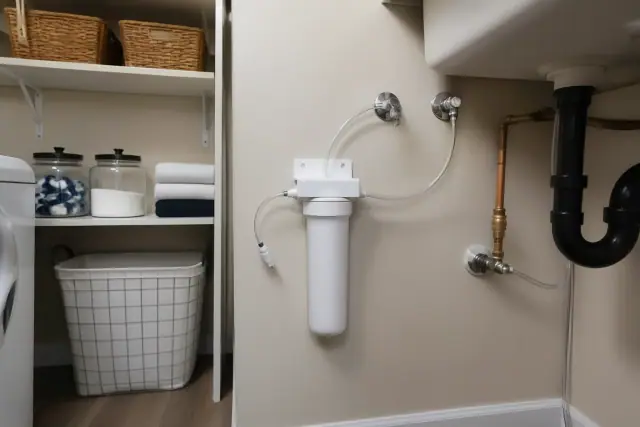
Under-sink water filters are compact systems installed below a kitchen sink, office sink, break room sink, wet bar, or casita sink. They are ideal when your main goal is cleaner water for drinking, cooking, coffee, tea, ice, and bottle filling at one dedicated location.
Under-sink systems may use carbon filtration, sediment filtration, specialty cartridges, multi-stage filtration, or reverse osmosis. Before installation, we inspect cabinet space, shutoff valves, water pressure, faucet layout, drain access for RO systems, and future filter replacement access.
For many Gilbert properties, under-sink filtration is the most efficient first upgrade. It can address drinking water concerns without the cost or space requirements of a full whole-home system. If the home also has scale, odor, or sediment throughout the property, an under-sink system can be paired with whole-home treatment.

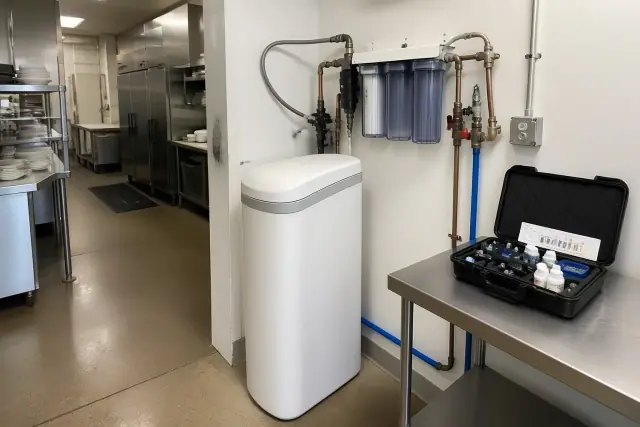
Tempe Water Filtration installs commercial water filtration systems for Gilbert offices, restaurants, coffee shops, retail spaces, medical offices, dental offices, salons, gyms, break rooms, and commercial properties. Commercial systems are designed around higher water demand, equipment protection, employee use, customer experience, and operating needs.
A Gilbert business may need commercial reverse osmosis for beverage stations or ice machines, carbon filtration for taste and odor, water softening for scale control, sediment filtration for equipment protection, or a whole-building system for broader treatment. We size commercial systems around flow rate, daily gallons used, peak demand, equipment sensitivity, and water test results.
Commercial water treatment is especially important when water affects the customer experience. Coffee, tea, fountain drinks, ice, food prep, glassware, dishwashing, salon equipment, and medical or dental equipment can all be affected by hardness, chlorine, sediment, or dissolved solids.

Water filtration systems need routine maintenance to keep performing properly. Expired filters can reduce flow, allow taste and odor issues to return, strain downstream equipment, and shorten system life. We provide filter replacement, system inspections, RO membrane checks, water softener maintenance, carbon filter replacement, sediment cartridge replacement, and performance testing.
Replacement timelines vary by system and usage. Sediment pre-filters and carbon block filters are commonly replaced every 6–12 months, RO membranes often last 2–3 years, post-carbon polishing filters are commonly changed every 12 months, and water softener resin may last 10–15 years with proper maintenance.
Maintenance is not just about swapping filters. We check pressure, flow, housings, O-rings, fittings, salt level, brine tank condition, RO tank pressure, membrane performance, and filtered water quality when appropriate. We also provide reminders so your system does not quietly underperform for months.

PFAS filtration is designed for homeowners and businesses concerned about PFOA, PFOS, PFBS, PFPeA, and other forever chemicals. Gilbert began UCMR 5 testing in November 2023 and reported detections of PFOA, PFOS, PFPeA, and PFBS at three separate locations, including two well sites and the North Water Treatment Plant.
Gilbert reported PFBS at 10.0 ppt at the North Water Treatment Plant, PFOA at 3.9 ppt at Well 7, PFOS at 5.6 ppt at Well 7, PFPeA at 3.4 ppt at Well 7, and PFBS at 7.9 ppt at Well 25. Gilbert also stated that Well 7 was taken offline as a precaution and that the North Water Treatment Plant reconstruction includes granular activated carbon contactors as a PFAS treatment method.
PFAS cannot be seen, tasted, or smelled reliably, so testing and verified treatment technology matter. Systems used for PFAS reduction may include reverse osmosis, activated carbon, granular activated carbon, ion exchange, or a multi-stage setup depending on results, flow rate, certification, and maintenance requirements.

Water quality testing is the starting point for every Gilbert filtration recommendation. Testing helps identify whether your water concerns are related to hardness, chlorine, chloramine, TDS, sediment, pH, taste, odor, PFAS, chromium, lead, copper, arsenic, nitrates, or an existing system that needs service.
Gilbert’s distribution system includes more than 700 miles of pipeline and operates at about 60–80 PSI. Even with strong municipal monitoring, water can still be affected by your internal plumbing, fixtures, water heater, refrigerator filter, old RO system, or softener settings. In-home testing shows what is actually happening at your tap.
Choosing A Service
Choosing the right water filtration system in Gilbert starts with identifying the water problem you want to solve. A home dealing with scale on shower glass may need a different solution than one dealing with summer taste and odor, bottled water use, PFAS concern, cloudy water, chromium questions, or an older RO system that needs service.
Gilbert uses SRP water, CAP water, and groundwater wells, which means water quality can shift with source blending, demand, canal maintenance, seasonal changes, and neighborhood plumbing. Many Gilbert homes benefit from a layered approach that uses softening for hardness, carbon filtration for taste and odor, sediment filtration for particle control, and reverse osmosis for drinking water.
If your main concern is drinking water taste, mineral flavor, high TDS, PFAS, chromium, lead, arsenic, nitrate, fluoride, or bottled water dependence, an under-sink reverse osmosis system may be the best starting point. RO systems provide filtered water from one dedicated faucet for drinking, cooking, coffee, tea, ice, and bottle filling.
This is a strong choice for Gilbert households that want a dedicated drinking water solution without treating every fixture in the home. A remineralization stage can also be added when customers prefer the benefits of RO filtration with a smoother final taste.
If your goal is improved water at showers, faucets, laundry, fixtures, and appliances, a whole-home water filtration system may be the better fit. Whole-home systems are installed near the main water line so water is treated before moving throughout the property.
This option is often recommended for Gilbert homes dealing with disinfectant taste, odor, sediment, cloudy water, or general household water quality concerns. A whole-home filter can also be paired with a softener or under-sink RO system for broader water treatment.
If you see white buildup on faucets, showerheads, glass, tile, dishes, or fixtures, hard water minerals are likely part of the issue. Gilbert’s average hardness of 8–10 grains per gallon is enough to cause scale and soap performance problems in many homes.
A water softener is usually the strongest option when true hardness reduction is the goal. Salt-free conditioners may be considered when customers want lower maintenance or no salt, but they do not remove calcium and magnesium the same way a traditional softener does.
Gilbert’s FAQ notes that unusual taste, odor, or appearance can happen during the summer months of July through October. Moldy, musty, or earthy taste can be tied to seasonal organic matter such as plants or algae in lakes, reservoirs, and canals that deliver water to treatment facilities.
Carbon filtration can help with many taste and odor concerns, but the best setup depends on whether the issue is chlorine, chloramine, organic matter, sediment, or a combination. Testing helps determine whether a whole-home carbon filter, under-sink carbon filter, or reverse osmosis system is the better fit.
If your water is cloudy, milky, brown, discolored, or carrying particles, the cause may be air, sediment, disturbed water mains, plumbing conditions, or filter maintenance issues. Gilbert’s FAQ explains that brown water or sediment can occur when water main sediment is disturbed by hydrant maintenance, flushing, or a main break.
Sediment filtration can help capture physical particles before they reach fixtures, appliances, and downstream treatment systems. If cloudiness disappears after water stands, air may be involved; if it remains, testing and inspection can help identify the next step.
Some Gilbert homeowners want additional treatment because of PFAS detections, chromium history, heavy metals, fluoride, nitrates, or general confidence in drinking water. These concerns usually require more targeted filtration than a basic pitcher or refrigerator filter.
Reverse osmosis, granular activated carbon, carbon block filtration, and ion exchange may be considered depending on the contaminant and test results. The system should be selected based on verified reduction claims, flow rate, replacement schedule, and where the filtered water will be used.
Tired of Bad Water?
Gilbert homes often deal with issues connected to hard minerals, chlorine disinfection, seasonal surface water changes, groundwater use, canal maintenance, distribution sediment, and interior plumbing. These problems may affect taste, comfort, appliance life, cleaning, and drinking water preferences.
The most common complaints we hear from Gilbert homeowners include hard water scale, bleach-like taste or odor, summer earthy taste, cloudy water, brown sediment, appliance wear, and bottled water dependence.
Hard water is a common issue in Gilbert homes. The town’s FAQ lists average hardness around 8–10 grains per gallon and recommends softener settings around 10–12 grains to account for seasonal variation. That level of hardness can contribute to scale on fixtures, shower glass, dishes, water heaters, and appliances.
Hard water can also make soap less effective, leave residue on skin and hair, create spots on glassware, and increase cleaning time. A properly sized water softener helps reduce calcium and magnesium before they build up throughout the property.
Gilbert’s FAQ explains that bleach odors can come from chlorine used for drinking water disinfection. Some customers notice this more strongly in drinking water, showers, ice, coffee, tea, or water that sits in plumbing before use.
Carbon filtration is commonly used to reduce chlorine taste and odor. Depending on the property, a whole-home carbon filter, under-sink carbon filter, or RO system with carbon stages may be recommended.
Gilbert notes that unusual taste, odor, or appearance may occur during the summer months from July through October. Moldy, musty, or earthy odors can be related to seasonal organic material in lakes, reservoirs, and canals that supply treatment facilities.
A carbon filter can help many customers improve seasonal taste and odor concerns, especially when water is otherwise safe but unpleasant. Testing helps determine whether the issue is primarily aesthetic or tied to another water quality problem.
Cloudy water is often caused by air, but persistent cloudiness can point to another issue. Gilbert also notes that brown water or sediment may occur when material in water mains is disturbed by hydrant maintenance, water main flushing, or a main break.
Sediment filters can help capture physical particles such as rust, sand, silt, dirt, and pipe scale. A filter can be installed as a whole-home pre-filter or as a protective stage before RO, carbon filtration, or softening equipment.
Hard water and sediment can affect water heaters, dishwashers, washing machines, ice makers, coffee systems, fixtures, valves, and plumbing. Scale buildup may reduce efficiency, while sediment can clog screens, restrict flow, and shorten equipment life.
A combined water treatment plan may include sediment filtration, carbon filtration, softening, and reverse osmosis depending on your test results. The goal is not just better taste, but better long-term protection for the systems that use water every day.
Many Gilbert households rely on bottled water or refrigerator filters because they do not like the taste, odor, or mineral profile of tap water. Refrigerator filters may improve taste, but they are not always designed for PFAS, chromium, arsenic, lead, nitrates, fluoride, high TDS, or broader dissolved contaminants.
An under-sink reverse osmosis system can provide a dedicated filtered drinking water tap. When paired with whole-home filtration or softening, it can create a more complete water treatment setup for both daily comfort and drinking water confidence.
Built for Gilbert's Hard Water, Chlorine Taste, and Drinking Water Concerns
Choosing the right water filtration company in Gilbert matters because a system should be matched to the property, not sold from a generic package. Gilbert’s water sources, hardness, disinfection method, seasonal taste changes, groundwater wells, plumbing conditions, and household usage all affect which system makes sense.
Tempe Water Filtration provides water testing, custom recommendations, professional installation, and ongoing support for Gilbert homeowners and businesses that want cleaner water and fewer water-related problems.
Gilbert receives surface water from SRP and CAP, operates the North Water Treatment Plant and Santan Vista Water Treatment Plant, and uses groundwater wells to help meet high demand and canal maintenance needs. The North Water Treatment Plant can produce up to 45 million gallons per day and has a 16 million gallon onsite reservoir.
Santan Vista receives CAP water through approximately 14 miles of 48-inch ductile iron pipeline, has an initial capacity of 24 million gallons per day, and provides 12 million gallons per day of that capacity to Gilbert through its partnership with Chandler. The plant uses ballasted flocculation with an average process time of 20–25 minutes and has 6 million gallons of onsite reservoir capacity.
Gilbert also has nearly 44 million gallons per day of groundwater availability from 17 wells, not including reservoir storage. In total, Gilbert reports approximately 101 million gallons per day of production capacity and just over 45 million gallons of storage capacity.
Every installation starts with water testing. We review hardness, chlorine, chloramine concerns, TDS, sediment, taste, odor, pH, and other indicators depending on your situation. For advanced concerns, lab testing may be recommended for PFAS, chromium, heavy metals, nitrates, arsenic, or other contaminants.
Testing helps us decide whether you need a whole-home filter, water softener, reverse osmosis system, carbon filter, sediment filter, PFAS system, commercial system, filter replacement, or maintenance for an existing setup. This keeps the recommendation practical and avoids unnecessary equipment.
A good water filtration system only works properly when it is sized, installed, connected, tested, and maintained correctly. Our technicians handle system placement, plumbing connections, pressure checks, startup, walkthrough, and maintenance guidance.
After installation, we provide support for filter replacement, system inspections, RO membrane replacement, water softener maintenance, carbon and sediment filter changes, and troubleshooting. We also offer maintenance reminders, preventative checkups, and ongoing service support so your Gilbert water filtration system keeps performing after installation day.
How it works
Our installation process is designed to make water filtration simple, clear, and reliable. From the first consultation to long-term maintenance, we help Gilbert homeowners and businesses understand their water and choose the right system.
Every step is focused on matching your actual water conditions to the correct equipment, then installing and supporting that system properly.
01.
Call Tempe Water Filtration or submit the estimate form to tell us about your Gilbert water concerns. We will ask whether you are dealing with hard water scale, chlorine taste, summer odor, sediment, high TDS, bottled water use, PFAS concerns, appliance wear, commercial water issues, or an existing system that needs service.
We also review your property type, household size, business type, plumbing layout, water usage, peak flow demand, and budget. This helps us prepare for the right type of water test and system discussion.
02.
We test your water for the concerns most relevant to your property. This may include hardness, chlorine or chloramine indicators, TDS, sediment, pH, taste, odor, pressure, and system performance if you already have filtration equipment.
For advanced drinking water concerns, lab testing may be recommended for PFAS, chromium, lead, copper, arsenic, nitrates, or other contaminants. Testing gives us real data so we do not rely on assumptions.
03.
After testing, we explain your results in plain language. We compare options such as whole-home filtration, reverse osmosis, water softening, carbon filtration, sediment filtration, PFAS treatment, commercial filtration, or filter replacement.
We also explain what each system does and does not do. This helps you understand whether you need one system, a simple maintenance visit, or a combination setup.
04.
Once the right system is selected, our technicians install the equipment, connect it to the correct plumbing location, check fittings, review pressure and flow, and confirm the setup is working as intended.
We work carefully to protect cabinets, counters, flooring, plumbing, and the installation area. Whether the system is under the sink, near the main water line, in a garage, mechanical area, office break room, or commercial point of use, we focus on clean workmanship and service access.
05.
After installation, we walk you through the system so you understand how it works, where it is located, and what maintenance is required. We explain filter changes, bypass valves, salt levels, RO faucet operation, tank fill time, pressure expectations, and replacement timelines depending on the system.
When appropriate, we can provide before-and-after water quality readings so you can see measurable improvement. This is especially useful for RO systems, carbon filters, sediment filters, softeners, and maintenance visits.
06.
After installation, we provide ongoing support to keep your system performing properly. This may include filter replacement reminders, scheduled maintenance, water softener service, RO membrane replacement guidance, pressure checks, water testing, and system inspections.
Gilbert water conditions and household usage can affect replacement timelines, so we help create a service schedule that fits your system. This helps prevent expired filters, reduced flow, taste problems, leaks, and preventable equipment issues.
Case study 1: A Gilbert homeowner in Power Ranch, Seville, or Layton Lakes dealing with white scale, spots on dishes, and dry-feeling skin may see the best results from water softener installation or a combined softener and whole-home filtration system. After testing hardness and reviewing household usage, the system can be sized to reduce calcium and magnesium minerals before they cause buildup throughout the home.
Case study 2: A household near Agritopia, The Islands, or Val Vista Lakes that buys bottled water because of taste, odor, fluoride, chromium, or drinking water concerns may benefit from under-sink reverse osmosis. A properly installed RO system can provide dedicated filtered water for drinking, cooking, coffee, tea, ice, and bottle filling while helping reduce bottled water purchases.
Case study 3: A Gilbert business such as an office, restaurant, coffee shop, gym, salon, dental office, medical office, or break room may benefit from commercial filtration based on equipment and water demand. Sediment filtration can protect equipment, carbon filtration can improve taste and odor, softening can reduce scale, and commercial RO can improve water used for beverages, ice, coffee, and food prep.
GET CLEANER WATER
Cleaner water starts with testing, proper system design, and professional installation. Tempe Water Filtration provides whole-home water filtration, reverse osmosis systems, water softeners, carbon filters, sediment filters, under-sink systems, PFAS filtration, commercial filtration, filter replacement, and water quality testing throughout Gilbert, AZ and the surrounding East Valley.
WATER FILTRATION HELP
Tempe Water Filtration installs water softener systems, reverse osmosis drinking water systems, whole-home water filtration, carbon filters, sediment filters, under-sink filters, PFAS filtration systems, commercial water filtration systems, and replacement filters throughout Scottdale, AZ.
Gilbert’s FAQ notes that unusual taste, odor, or appearance can occur during the summer months of July through October. Moldy, musty, or earthy taste may come from seasonal organic matter in lakes, reservoirs, and canals that deliver water to treatment facilities. Carbon filtration or reverse osmosis may help depending on the cause.
Tempe Water Filtration installs whole-home water filtration systems, reverse osmosis drinking water systems, water softeners, carbon filters, sediment filters, under-sink filters, PFAS filtration systems, commercial water filtration systems, and replacement filters throughout Gilbert, AZ.
Yes. Gilbert water is commonly hard. The town’s FAQ lists average hardness around 8–10 grains per gallon and suggests setting water softeners around 10–12 grains to account for seasonal variation. Testing your property gives the most accurate number for system sizing.
For true hardness reduction, a salt-based water softener is usually the strongest option. Salt-free conditioners may help reduce scale behavior in some situations, but they do not remove calcium and magnesium the same way an ion exchange softener does.
Gilbert’s FAQ explains that a bleach odor can be caused by chlorine used for drinking water disinfection. Carbon filtration is commonly used to reduce chlorine taste and odor, either at the whole-home level or at a dedicated drinking water tap.
Brown water or sediment can happen when material in water mains is disturbed by hydrant maintenance, flushing, or a water main break. If particles or discoloration continue at your home, sediment filtration and water testing can help determine the right next step.
A whole-home filter is best when you want better water throughout the property, including showers, laundry, fixtures, and appliances. An under-sink filter is best when your main goal is cleaner drinking and cooking water at one tap. Many Gilbert homes benefit from both.
Reverse osmosis may be worth it if your drinking water tastes mineral-heavy, has high TDS, or if you are concerned about PFAS, chromium, lead, arsenic, nitrates, fluoride, or dissolved contaminants. RO is usually installed under the kitchen sink with a dedicated faucet.
Yes. Gilbert began UCMR 5 testing in 2023 and reported detections of certain PFAS compounds at three locations, including well sites and the North Water Treatment Plant. Gilbert stated that affected Well 7 was taken offline as a precaution, and the town has discussed treatment options such as granular activated carbon.
Gilbert reported PFBS at 10.0 ppt at the North Water Treatment Plant, PFOA at 3.9 ppt at Well 7, PFOS at 5.6 ppt at Well 7, PFPeA at 3.4 ppt at Well 7, and PFBS at 7.9 ppt at Well 25 during UCMR 5 testing. The town stated that PFAS detections were restricted to a few sites and not found townwide at that time.
Not every Gilbert home needs PFAS filtration, but homeowners concerned about PFAS should test before choosing a system. PFAS filtration may include reverse osmosis, activated carbon, GAC, ion exchange, or specialty media depending on results and system certification.
Yes. Gilbert’s FAQ states that fluoride is added to bring tap water concentration to approximately 0.7 mg/L. Homeowners who want to reduce fluoride in drinking water often consider reverse osmosis systems.
Some reverse osmosis systems are used for chromium reduction when properly certified. Gilbert’s FAQ notes that only some home treatment systems are effective for chromium and recommends looking for NSF/ANSI Standard 58 certification for chromium removal claims.
Gilbert reported that during 2013–2015 monitoring, hexavalent chromium was found in 63 of 68 samples taken throughout Gilbert. The reported range was 0–17 ppb, with an average concentration of 5.9 ppb. Current treatment recommendations should be based on your own tap water test and certified system performance claims.
Cloudy or milky water is commonly caused by air in the water. If cloudiness does not disappear after standing, there may be another cause. Testing can help determine whether sediment filtration, system maintenance, or another treatment option is needed.
Filter replacement depends on system type, water quality, and usage. Sediment pre-filters and carbon block filters are commonly replaced every 6–12 months, post-carbon polishing filters are commonly changed every 12 months, and RO membranes often last 2–3 years.
Common certification categories include NSF/ANSI 42 for aesthetic concerns such as chlorine taste and odor, NSF/ANSI 44 for water softeners, NSF/ANSI 58 for reverse osmosis systems, and NSF/ANSI 401 for certain emerging contaminants. The exact certification should match the contaminant you want to reduce.
Yes. Sediment filtration, carbon filtration, and water softening can help protect water heaters, dishwashers, washing machines, ice makers, coffee systems, and fixtures from sediment, chlorine effects, and hard water scale depending on the system selected.
Yes. We test your water before recommending a system. Testing may include hardness, chlorine, TDS, sediment, pH, taste, odor, and other concerns. Lab testing may be recommended for PFAS, chromium, heavy metals, nitrates, arsenic, or more detailed drinking water analysis.
Yes. We install commercial filtration systems for offices, restaurants, coffee shops, gyms, salons, break rooms, retail spaces, medical offices, dental offices, and other businesses. Systems may include commercial RO, carbon filtration, softening, sediment filtration, or whole-building treatment.
Cost depends on system type, water test results, plumbing access, home size, business demand, and installation complexity. Basic under-sink systems may start in the hundreds, while whole-home filtration and softener systems cost more depending on capacity and equipment. We provide clear pricing before installation.
We serve Gilbert and nearby areas throughout the East Valley and Phoenix metro, including Tempe, Chandler, Mesa, Queen Creek, San Tan Valley, Ahwatukee, Scottsdale, Phoenix, Guadalupe, and surrounding communities.
Call Tempe Water Filtration or request an estimate online. We will schedule a consultation, test your water, explain your options, provide a clear quote, and install the system that fits your Gilbert property.
Phone: 480-631-3899
Email: [email protected]
Contact Us Anytime: Messages accepted 24/7
Business Hours:
Mon to Fri: 8:00 AM - 6:00 PM
© 2026 Tempe Water Filtration. All rights reserved.